Overview
Tanzania operates on a different scale entirely. The Serengeti alone is larger than Switzerland. The Ngorongoro Crater holds a complete ecosystem inside an ancient volcano. Zanzibar sits off the coast like a thought that wandered away from the mainland. You could spend a month here and feel you have only scratched the surface.
What Tanzania does particularly well is silence. In the southern parks, in the western wilderness, in the conservancies that surround the northern circuit, there are places where you can go an entire morning without seeing another vehicle. That kind of space is increasingly rare, and Tanzania has protected it.
The people here are some of the warmest in East Africa: the Chagga communities on Kilimanjaro's slopes, the Maasai who have coexisted with the Serengeti's wildlife for centuries, and the Hadzabe of Lake Eyasi, one of the last hunter-gatherer communities on the continent.
History
Over a third of Tanzania's land is protected for wildlife. The Serengeti and the Ngorongoro Crater have been recognised internationally for decades, and Jane Goodall's foundational chimpanzee research began at Gombe, just north of Mahale, establishing Tanzania's west as a centre of primate research that continues today. The Hadzabe near Lake Eyasi have resisted agricultural settlement for thousands of years, making them one of the last hunter-gatherer communities on earth.
Niche Features
Six landscapes within one country: the Serengeti's endless plains and the stage for the Great Migration; the Ngorongoro Crater, a UNESCO World Heritage Site holding roughly 25,000 animals within a self-contained caldera ecosystem; Zanzibar's Stone Town and spice-trade history alongside the white sand of Nungwi and Kendwa; Tarangire's elephant herds and ancient baobabs, and Lake Manyara's tree-climbing lions; Ruaha and Nyerere in the south, holding roughly ten percent of the world's lion population and one of the continent's most significant African wild dog populations; and Mahale on Lake Tanganyika, reachable only by boat or charter aircraft, home to one of the largest habituated chimpanzee populations on earth.
22+ national parks and reserves, 38% of Tanzania's land under protection, and the same 1.9 million-strong wildebeest migration shared with Kenya's Maasai Mara.
Attractions & Activities
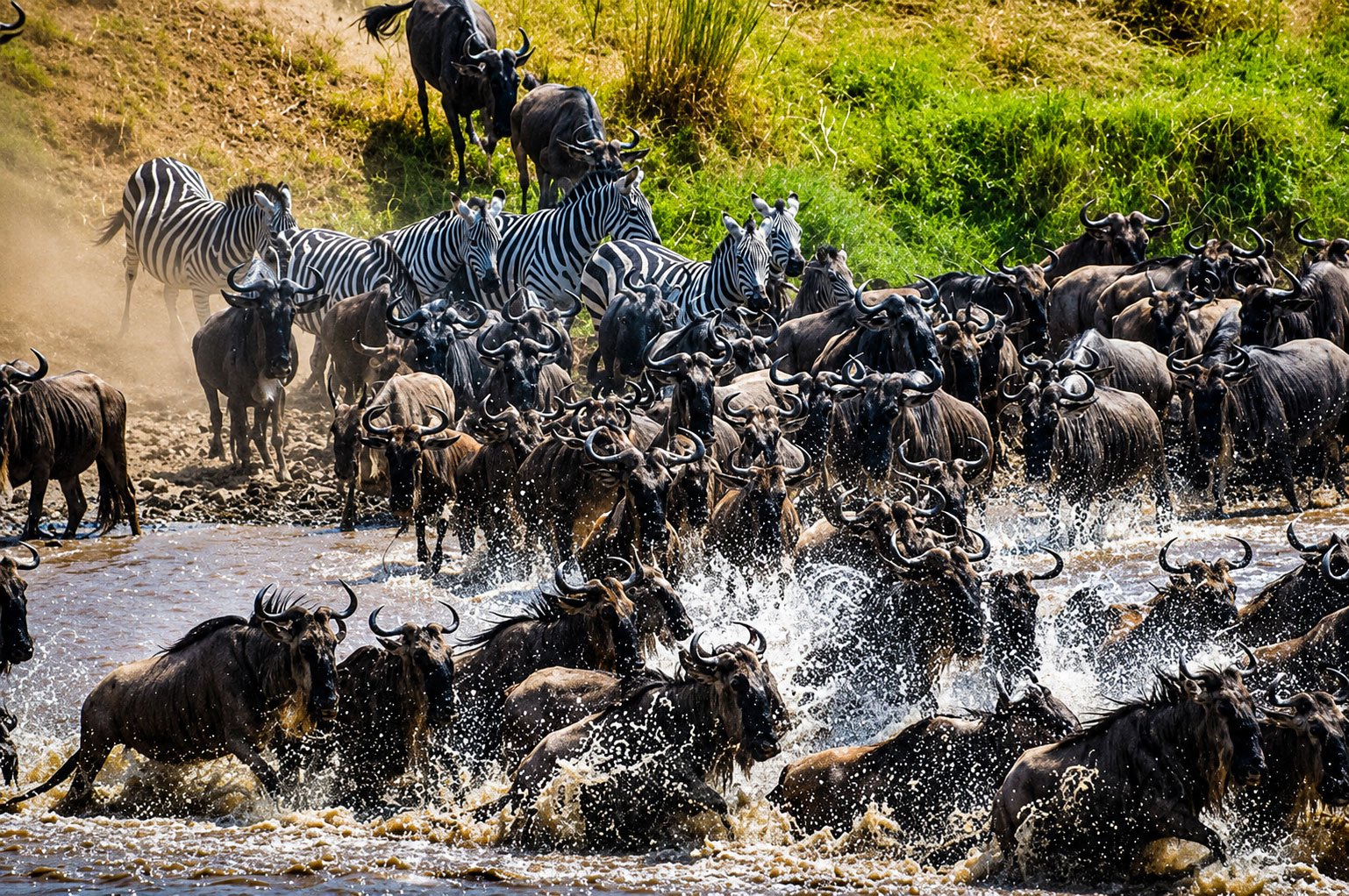
The Great Migration: calving season on the southern Serengeti plains (Dec-Mar), with the herds moving north into Kenya from July and the Mara River crossings running through October.
Hot Air Balloon Safari over the Serengeti plains at dawn, followed by a champagne bush breakfast.
Chimpanzee Trekking at Mahale Mountains National Park, reachable only by charter flight and boat.
The Hadzabe Bushmen at Lake Eyasi: a morning learning to read tracks with one of the last hunter-gatherer communities on earth.
Walking Safaris & Wild Dog Tracking at Ruaha National Park.
Stone Town & Spice Farm Tour in Zanzibar.
Private Crater Drive at first light on the Ngorongoro Crater floor, 600 metres below the rim.
Best time to visit: December-March (calving season on the southern plains, peak predator activity); April-May (long rains, green season, lower rates); June-October (peak dry season, the Migration moving north, book six months ahead); November (short rains, brief afternoon showers, good value before the season turns).
Accommodations for this destination are being added — ask our safari experts directly in the meantime.
Ask Us DirectlyStarting points
Kenya & Tanzania
Eight days. Two million animals. One lifetime.
Maasai Mara, North Serengeti
Kenya & Tanzania
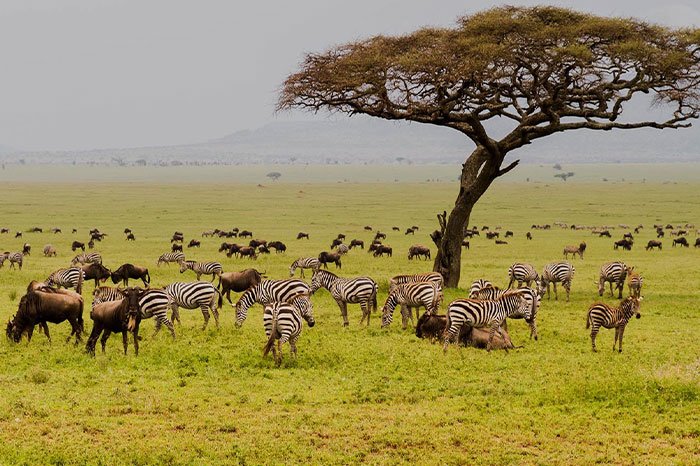
Kenya and Tanzania. The full sweep of the savannah.
Amboseli, Ngorongoro, Serengeti, Maasai Mara
Kenya & Tanzania & Zanzibar
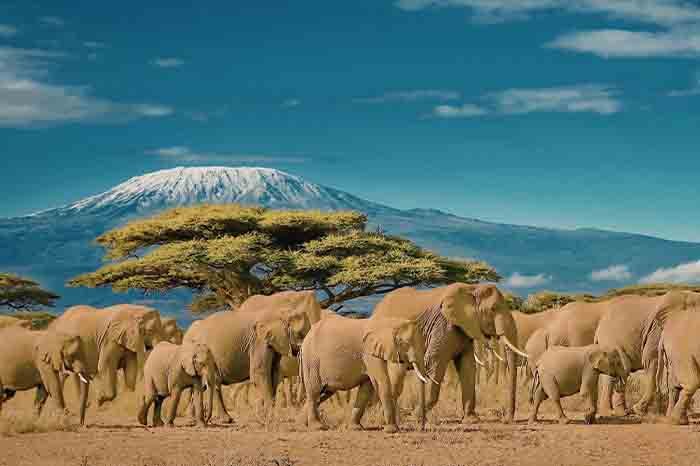
For those whose roots run deeper than tourism.
Nairobi, Mara, Nanyuki, Tsavo, Mombasa, Diani, Dar es Salaam, Stone Town, Nungwi
Ready to experience Tanzania?
Begin Your Journey